Early Diagnosis – Academic skills
Psycho-educational and developmental intervention
Delaying diagnosis can be detrimental to the child. Diagnosis is possible as early as two years of age and sometimes even earlier, i.e. around 18 months.
Early diagnosis is critical for the child’s development and essential to achieve a degree of autonomy and the ability to learn.
We offer:
Early Intervention Program for children between 3 and 6 years of age.
The participation of one or both parents is highly desirable.
Intervention is based on play, a positive environment, affection, and stimulation based on the child’s own interests.
- a personalised project based on each child’s own ability and chosen in partnership with the parents,
- a holistic approach,
- a psycho-educational and developmental intervention,
- a conventional school time-table.
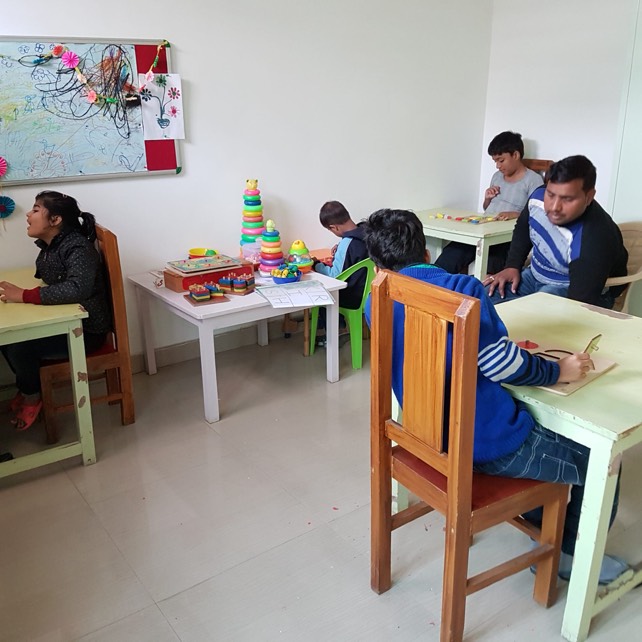
Intermediate section for children between 7 and 14 years of age
The intervention consists of five different sessions:
- Morning routine: prayers, announcing the date, roll-call, poetry and singing,
- Yoga session,
- Class-room sessions for individual activities around cognitive learning,
- Sensory integration sessions,
- Creative activities and games after lunch.
Therapeutic follow-up
This specialised framework offers the child a regular individual follow-up, taking into account his or her needs and abilities, so that he/she can gradually achieve more autonomy.
Art and interactive games as group therapy
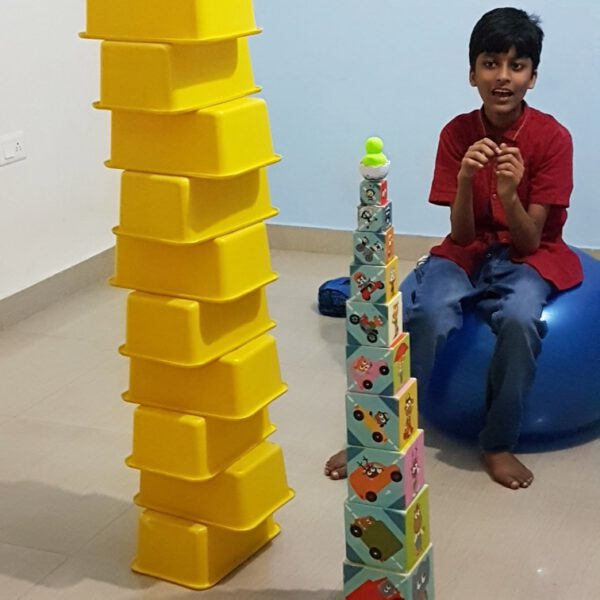
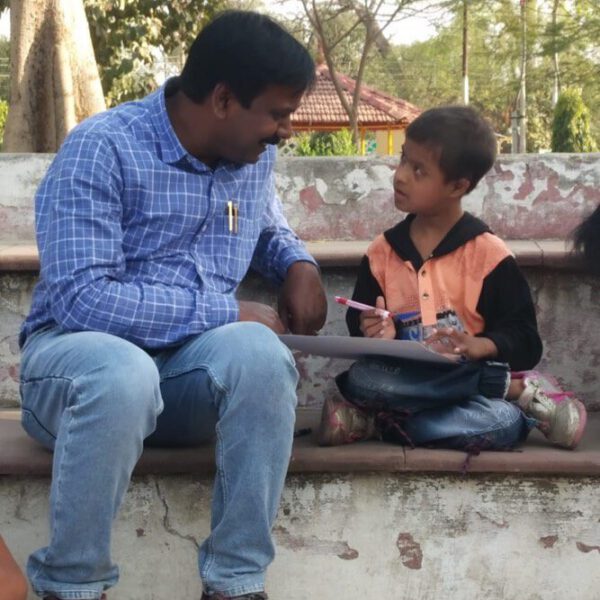
A new study shows that engaging young children with autism in a programme that involves fun and interactive play can have a positive affect on their cerebral activity. This research is the first to demonstrate that early behavioural intervention may be associated with normal patterns of brain activity and improved social behaviour in young children with autism.
Laughing, giggling and making funny faces
Building a tower of blocks together and then knocking it down
Support for Families
Taaro Ke Bacche offers families:
- Information and guidance,
- Contact with other families living similar in situations.
The role of parents is essential in the child’s education. The fact that the child is autistic does not in any way diminish the necessity to educate their child. We help parents to understand their child’s behaviour.
Advice on diet and nutrition
In parallel with educational intervention, we promote a biomedical approach working closely with nutritionists.
Transportation
Distance is not an obstacle. If necessary, transport is provided.
Coming soon…
- In Autumn 2021, we aim to start offering pre-vocational training for our children reaching adolescence. This will cover baking, weaving and paper craft skills.
- Our long term plan is also to create a bakery in collaboration with Brown Bread Bakery offering healthy products and providing an opportunity for vocational training.
Our experience has shown us that with a certain degree of self-confidence and success in their activities, whether it be through vocational training, sport, music or art, the young adults are able to overcome the most severe aspects of autism or Down’s syndrome.
This is part of our mission to promote overall well-being in keeping with our holistic approach.